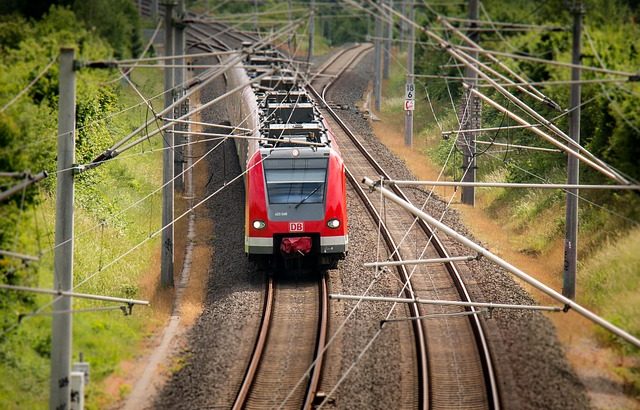
THE PLANNING, DESIGN AND CONSTRUCTION OF OVERHEAD LINES COURSE

This course provides overview of the relevant aspects of overhead lines development with planning, design, and construction. All topics will be presented thoroughly, using detailed overhead templates, videos illustrating examples and experiences of the topics discussed will be shown. End of this course, participants will have an overall appreciation of overhead line technology and will have gain modern line design practices. They will also be in a position to see clearly the possible routes of further development in their specific area.


Course Structure

Power System Planning

Power System Planning – Case Study

Power Transfer Capability

Environmental Impact & Case Study

Electrical Design

Earthing and Case Study

Insulation Co-ordination

Electromagnetic Fields and Case Study

Insulation Design

Ground Wire

Lightning Protection

Line Components – Tower Design

Line Components – Foundation Design

Mechanical Design and Hardware, Case Study

Mechanical Oscillation

Conductor Optimisation & Case Study

Communication over Power Lines

Line Construction

Insulation Selection

Line Design Tools – Introduction

Structural Design Approach

TOWERS, Case Study

Structural Design – POLES, Case Study

Tower Spotting – PLS Cadd

Tower Spotting, Case Study

Tower Test Requirements

Tower Test Station Tour

Line Design Quiz
TESTTTTTT

PROTECTION OF ELECTRICAL POWER SYSTEMS

This course aims provide to needed theoretical and practical instruction on HV/LV electrical protective equipments as primary and secondary injection, utilising electronic, microprocessor, and electro mechanicals.It also include covers industrial electrical protection and involves some practical exercises which are combined with group theory. Some forefront protective devices are used during the course as mechanical, electromechanical and microprocessor based devices.

Prerequisites

This training programme requires a good foundation of electrical knowledge.

Who Takes This Course

Supervisors, Technicians, Electrician, Electrical, Plant Engineers

Course Structure

Understanding power system

Understanding fuse and MCCB

Understanding Voltage transformers

Understanding transformer magnetisation curves

Primary injection (testing)

Secondary injection (testing)

Classification and function of relays

How to protect transformer?

Protection of motor, generator, feeder and bus zone

TESTTTTTT

PROFESSIONAL HIGH VOLTAGE SAFETY COURSE

This program aims to provide an understanding of industrial high and low voltage power systems which is including statutory regulations, safe operation, protection and fault diagnosis on a wide range of power equipment. It  also enables participants to perform HV switching operations on industrial HV networks towards 15kV, for gaining the ability to HV authorisation in accordance with their companies’ safety rules and regulations.


Course Structure

Electrical hazards

Precautions

Electricity at work & regulations

Safety features of switchgear

Land based substation and safety requirements

Safety rules (HV)

Emergency conditions  in secondary hazards

Operational procedures

Key safe & polyol systems

TESTTTTTT

PROFESSIONAL ELECTRICAL POWER SYSTEM PROTECTION

This course will explain many points in detail and provide the skills and knowledge necessary to calculate fault currents, select relays and associated instrument transformers appropriate to most esed typical systems or equipments. It also help to develope how to adjust the setting of the relays which help to clear the fault faster than the backup devices.


Course Structure

Power system overview

Basics principles of power system protection

Types of faults

Short circuit current calculations

System earthing

Fuses and circuit breakers protection

Transformers

Errors of ratio and phase angle

Relays and auxiliary power equipment

Protection grading and relay coordination

Unit protection and applications

feeders and lines protection

Transformers Protection

Rotating machinery protection

TESTTTTTT

POWER QUALITY AND HARMONICS COURSE

Many power equipments are in use today, near benifits of them, they also bring power quality problems than ever as the sensitive to power quality problems VFDs, PLCs, electronic ballasts, data processing and medical equipments. This course would provide participant with the ability to quickly identify and remedy power quality problems in certain time. When it nededed, the participants gained ability will help ensure metering accuracy, lengthen the life of electrical equipment and improve power system availability any time.


Course Structure

Production and Usage of Electricity

Voltage and Current Measurements

Power Characteristics

Power Quality Problems

Power Measurements

Effects of Poor Power Quality

Power Transmission and Distribution

Building Distribution Systems

Power Conditioning and Protection

TESTTTTTT

OPERATION AND MAINTENANCE OF BASIC AIR CIRCUIT BREAKERS TRAINING

The basic principle of controlling danger with the operation of High Voltage (HV) and Low Voltage (LV) circuit breakers lies at the centre of all networks, from a major transmission system, down to a simple radial LV distribution board. Failure of one of these breakers can cause catastrophic damage to other equipment and is extremely hazardous to nearby personnel. This course aims to provide a primary understanding of the operation of circuit breakers and to outline the relevant operational aspects of the unit.


Course Structure

Identify the circuit breaker standards

Electrical circuit breaker operation and adjust linkages, switches and contacts

Important aspects of the control unit

Utilize appropriate personal protective equipment and safe work procedures including lockout tagout

Evaluate breaker ratings for various applications

Interpret control schematics and mechanical theory

Explain removal and restoration procedures

Perform circuit breaker maintenance service per NETA specifications


Requirements

Participants should have basic knowledge of AC/DC electricity.

TESTTTTTT

MAINTENANCE OF CIRCUIT BREAKERS & SWITCHGEARS COURSE

About Course

Switchgear, circuit breakers and transformers are vital components in electrical distribution systems and their operation significantly affects the overall performance of the all system. Our course will provide participants well understanding on the safe use of circuit breakers, switchgears and associated equipment that requires correct initial selection, operation and maintenance.

Course Structure

Application of Switchgear

Safety Policies

The Technology of Circuit Breakers and Switchgear

Diagnostics, Testing and Maintenance

Transformers’ Main Functions and Classification

Power Transformer Electrical Tests

Describe the fundamentals of operating switchgear and circuit breakers

Select appropriate type and rating of circuit breakers and switchgear

Understand the operation of switchgear components (CTs, VTs, relays and cable terminations)

Describe the principles of operation of power transformers

Operation of Various Types of Interrupting Equipment

The Interpretation and use of Drawings and Job Plan

TESTTTTTT

INSTRUMENTATION AND CONTROL FUNDAMENTALS

About Course

Instrumentation and control fundamentals certificate program covers many areas as pertaining to the instrumentation, main and fundamental concept of control system and components (sensors, input/output elements, controllers, final control elements etc.) of surface facilities. It also covers specific instrumentation, controls for pressure, temperature, flow, level, density, control valve, and field data acquisition systems.  End of the course participants will be familiar with the basic working principles, measuring devices, operations, and specifications of surface facilities.

Course Structure

Measurement, Instrumentation, and Controls

Pressure Control System and Control Valves

Level and Temperature Control Systems

Flow Rate Control System: Gas and Liquid

PLC, DCS, and SCADA

TESTTTTTT

INDUSTRIAL ELECTRONICS MAINTENANCE SKILLS

The fundamental knowledge and skills about to main and related fields which one needs during career in the Industrial Electronics and Electrical Maintenance Technology would be subjected in the course. The program allows gaining new skills via class applications and interactive contents.

Audience

Electrical engineers also who plan to fulfil a maintenance role in similar fields.


Course Structure

Measure AC and DC circuits

Test/troubleshoot components

Remove/replace/test fuses

Replace protective control devices

Faulty electrical control components

Motors

Electrical cords and plugs

Low voltage control circuit

AC/DC drive

Circuit diagrams

Switches and relays

Safety

Fiber optics lines

Customer service skills

Team work

Identify and solve problems

Salary, wages, and benefits packages

TESTTTTTT

GENERATOR SYSTEMS COURSE

The generator systems course program, carefully designed to provide participants knowledge about maintenance and troubleshooting. It also cover the information  basics about generators , latest developments, controlling and managing.

Audience: Electrical Engineers, Electrical Supervisors, Electrical Technicians and anyone who engage with generator at work.

Course Structure

Generator systems AC / DC  and equipment

Generator technologies

Standards and usage

Testing processes

Maintenance processes

Troubleshooting processes

TESTTTTTT